Affiliate Marketing 2026: How I Spent $260 And Made Over $14,000!
You've mostly heard this term thrown all over the internet Affiliate Marketing! How do you get the ball rolling and make good money with Affiliate marketing in this noisy world of ours where everyone is trying to do it? In this article, I'm going to actually go into, how I spent $260 and made over $14,000 with affiliate slash referral marketing? And I'm going to give you three steps on how you can do the same. If you're not in a reading mood, you can always watch the video below!
So let's get into it. Affiliate marketing. This is a term that has been thrown around the internet for a while, saying you can get this, you can get that. It can be passive income. You can make so much money with affiliate marketing and you don't have to worry about shipping the product out, someone else is going to take care of that.
That's very much true. But how do you actually make affiliate marketing work and how much money can you make with that? In this video, I'm going to share with you a tactic that I used to spend $260, and I got a return of over $14,000 using affiliate marketing just from this one tactic. So stay tuned if you want to know more about how I did it. And I'll also sum it up in three steps that you can take to make a lot of money with affiliate marketing.
So one thing I said in my book, The Anatomy of Financial Success, I mentioned that affiliate marketing is a sleeping goldmine. There are not a lot of people are really tapped into. And this video is actually going to go into details of how I've leveraged it over the years. With that being said, it's time to share with you how I was able to make over $14,000 with affiliate marketing and only spending $260.
The Proof
Of course, before I get into how I did it, you all want to know did I actually did it. So let me show you the proof. In this video, at watch time 2:58 I show my Amazon dashboard and I added all of the payments up. So that number is $437.18.
Now moving on to my second channel, the app lifestyle, you got to take a look at the analytics to see how much this channel has made.
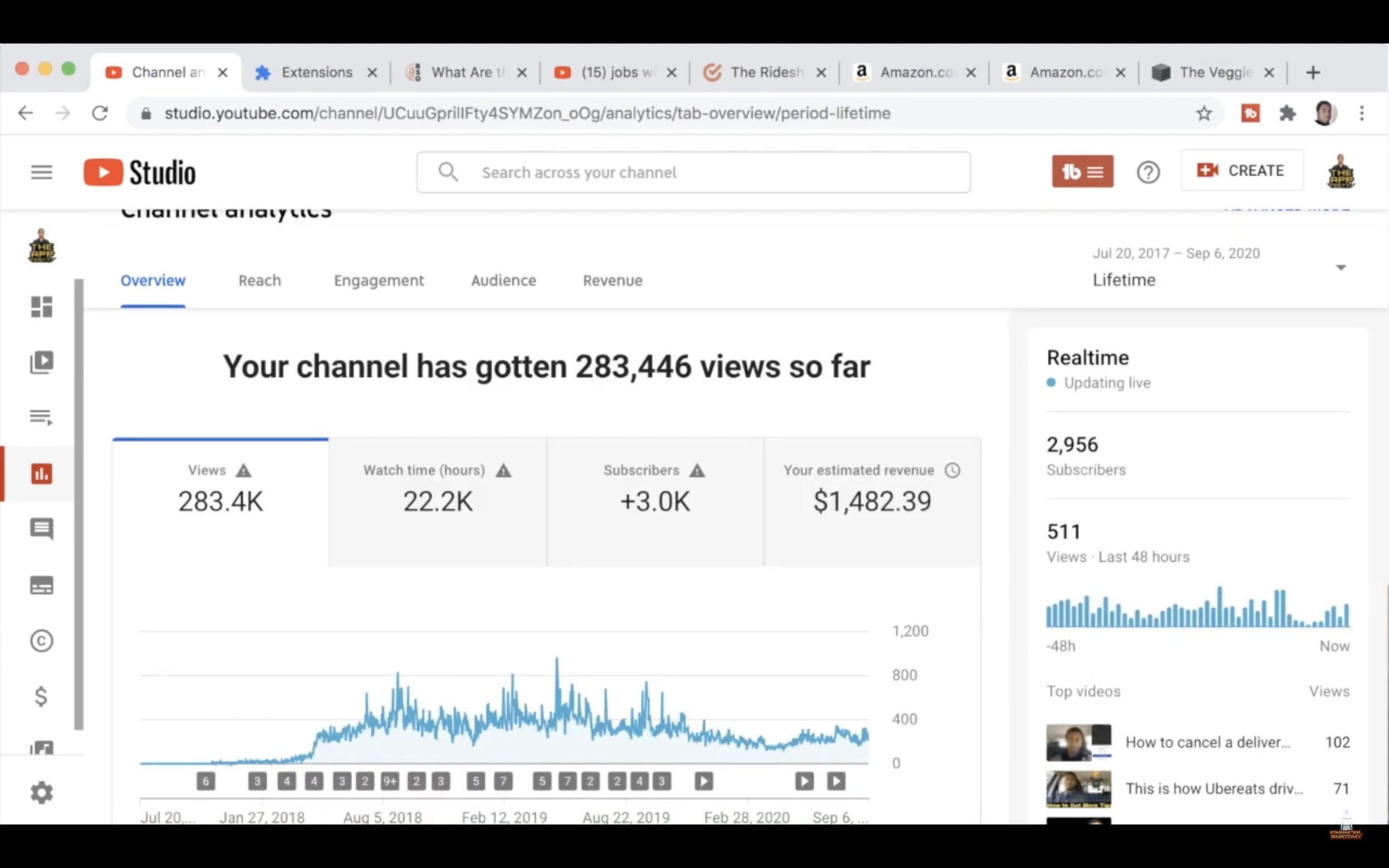
The screenshot above is a more recent shot of the channel earnings which is why the number is higher. At the time of the study, the channel had made $1,482.39 so we will use that number. While this is technically not affiliate marketing , i count it because it still largely stemmed from the 3 steps that we'll get into later.
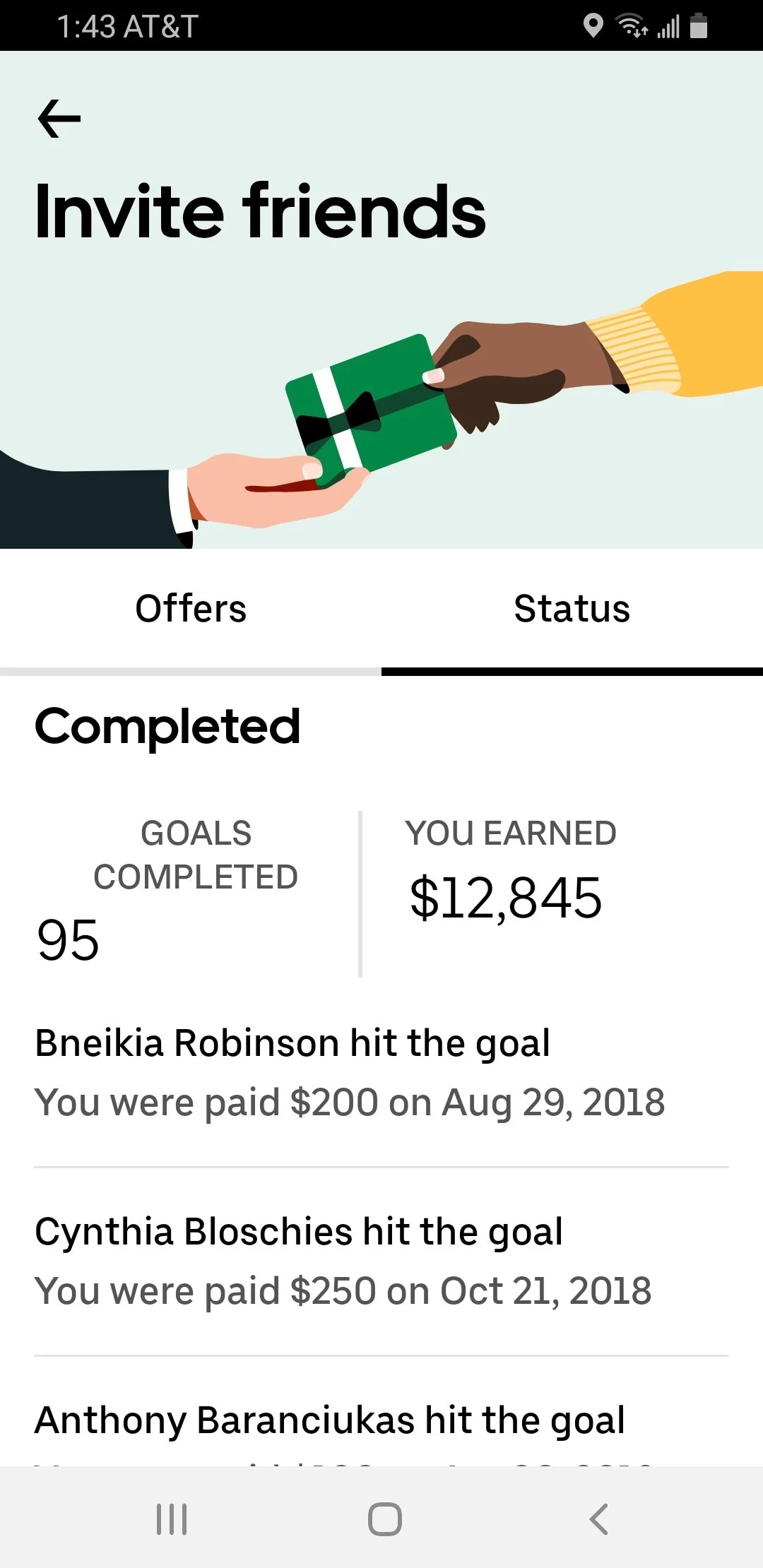
Next we're going to show how much I made from Uber Eats referrals and a little bit of Uber of course too. Just going to go to earnings, and we're going to go to referrals, scroll down, and we're going to go to the amount that is already been earned. So that's $12,845.
So now that you've seen the proof let's get into the steps and tactic that I used to make this a reality. Now, right off the bat, you do have to already have these two things set up before I even go into these three steps otherwise it's not going to mean anything. You have to pick a niche that you want to do affiliate marketing in.
So stereotypically, the three niches are health and wellness, something financial or relationships. You got to pick which one you want to focus on. And once you pick which one of those categories that you want to focus on, you got to niche down even further. So get a little sub category and really start providing value in that sub category. So for me, in this particular case, it was Uber and Uber Eats. More so Uber Eats and showing people how to make a lot of money with it.
So that's in the financial area, but I really niched down to a specific part in a financial area in terms of making money. Once that's been done, you need to pick a list of affiliates that you're actually going to sign up for so that you can get your commissions from. Those two things have to be done otherwise these three steps won't matter. But assuming that you've done those prior steps, we can get into the three steps which I used.
Step 1: Offer something of GREAT value
The first step is to offer something of great value to people for free. When I say great value, I'm not just talking about some throwaway thing that you're using just to get an email address or something. It has to really be great value and value is defined by how well you can get a person the result that they're looking for.
And if you can do it, you've accomplished your mission of providing great value. And if you can do it with the four letters attached, called F-R-E-E, you're going to position yourself to be in the right place to severely benefit from affiliate marketing. So what I did was, I created a YouTube channel called the app lifestyle. It also had a website called the app lifestyle, but the YouTube channel was the launching point.
With the YouTube channel I made a free Uber Eats course to show people how to take their Uber Eats earnings from whatever they were making, to being able to make between $11 and $18 an hour consistently. Not only did I do this, but I also showed how to make this money and actually reduce the amount of hours that you put in. So if you decide to put more hours in, then that means you're going to make more money.
Depending on your niche, it might be a person getting a certain weight. It might be a person getting a certain status in life. Whatever it is, if you're providing value and can give them the end result they want then you're going to be in the right spot.
Step 2: Make your offer easy to digest!
The second step that I did was I ordered all the information so that it was very easy and digestible for my audience. So it wasn't like they have to find everything from different places in my brand. I also didn't put any roadblocks towards them getting the result.
It actually is organized in a way so that they can just literally watch it if they have an hour of the time to spend on this course. They can then go out the next day or even later that day and start seeing immediate results.
We see it is organized in a very easy manner for the person to go onto the next part of the course and get results.
So we see seven must have Uber Eats items, Uber Eats tutorial. The 1st Part, how to handle a delivery. Part two, covering acceptance rate, cancellation rates or no wait times. Part three: what about hotspots? How do you use Uber Eats customer app to make you more money as a driver?
See all this is very organized and YouTube is actually recommending the next part in the course after a person watches that part because it's part of a series playlist.
Since this is a course, that works out greatly. But even if that's not the case, I've made sure that I've linked the next video in the card in the top right-hand corner and the video itself. So every opportunity someone has to watch the next part in the course, they can click on it. If at any point they want to go back and rewatch a certain part, they can just go back to the Uber Eats course playlist. That makes this easy and digestible.
Step 3: Get traffic to your value preposition!
The third way and here's where my hidden tech that comes into play is, you get traffic to whatever you're using to provide value. Now, in terms of YouTube, I haven't seen anyone talk about this. So I'm very excited to share this little tactic with you.
Everyone knows that YouTube algorithm plays a big role in getting traffic to your videos. And if you get traffic to your videos in affiliate marketing, that means there's more traffic for people to click on your links. I didn't mention this before, but you want to make sure you have your affiliate links in your description or whatever you're using to get value.
More traffic means more clicks, which means more money down the line for you. This is the tactic I used to get traffic to my YouTube channel, specifically the Uber Eats course. I found a very popular podcast where people are very open to making money in different ways and I advertised on that podcast. Now I did it in a very specific way. So you want to listen carefully.
I purchased a cheap domain from GoDaddy (It was less then $20). It was something very simple and that's key. You want to have something simple that someone can literally type in as they're hearing it and they can go to wherever it is you want them to go.
This is because we're going to use this domain and we're going to forward it, to whatever your value proposition is. In my particular case, it was the Uber Eats course, and the advertisement was basically "if you want to make more money, you should consider signing up for Uber Eats, go to www.makemoremoney.com. There, you can get a free Uber Eats course that shows you how to make between $11 and $18 an hour with Uber Eats on your own schedule as long as you have a car".
See, I was very specific and I used the word free. So I spoke to the result that people want, which is to make more money. And I also injected the word free, which is true because the course is free and it's on YouTube. Guess what happened? People went there and checked it out.
They started the Uber Eats course and they said, "Wait, hold on. This is more simple than I thought, let me go sign up." And since people got such great value from the course, they wanted to sign up using my link and my code. So my referral or affiliate code is in all my descriptions of all my videos. It's also pasted on the screen when I'm doing a video at some point during a video in the course. So this led them to go and sign up on the app lifestyle, or they would sign up for Uber directly and put the code in but it didn't stop there.
I also have a video where I talk about seven items that's good for Uber Eats drivers to have like an insulated bag. Accompanying that video is an article on the same thing. People would watch that video and then click on the article. This lead to many people getting some of those items in that article and the pictures in that article contain Amazon affiliate links. So when they buy, let's say the insulated bag, I would also get a commission on that purchase.
The funny thing about Amazon is they have a 24 hour cookie. If they buy anything in a 24 hour span, including what they're already buying, which is the insulated bag, then I get a commission off of that. In other words, they can buy a flat screen TV in addition to the insulated bag. The flat screen TV costs 500 bucks, but guess what? I get a commission based off that 500 bucks TV and an insulated bag!
The Grand Total
To summarize these three steps, I skipped out on the process of making a bunch of videos on YouTube, gradually building an audience until some people eventually start sharing it. Then the algorithm may give my videos some love. I bypassed that because that was too slow.
I decided to get traffic coming from outside of YouTube and that sent traffic to the Uber Eats course, which in turn, exploded the channel with the YouTube algorithm. This happen die to me getting a lot of traffic to come to me as opposed to fighting for it on the YouTube platform. Of course more views of my videos means more clicks on my affiliate links, which means more money for me.
So let's round the grand total up of how much I made with affiliate marketing using this tactic.
Amazon Affiliates: $437.18
The App Lifestyle: $ 1,482.39
Uber Referrals: $12,854
Grand total: $ 14,764.57
For those of you all that are really detailed, you know that's not exactly $14,000. It's actually more but $14,000 was a flat number I just had to put there. But this is the tactic I use to make this amount of money with affiliate marketing and I only spent $260.
So the popular podcasts that I decided to go with was a podcast called Tariq Radio and it cost $240 to advertise for four weeks on there. So my ad would run for four weeks after I purchased that ad. I spent a total of $260. $240 is for the podcast advertisement. And $20 was for the domain. And I arranged for the domains to redirect to the YouTube channel.
What was my ROI?
We're not done yet though!Now, what we're going to do next is we're going to find out what was my ROI (Return on investment) was. My investment in this case was the $260. My amount returned was $14,764.57.
ROI is calculated by subtracting the initial value of the investment (260) from the final value of the investment (14,764) , then dividing this new number by the cost of the investment (260), and, finally, multiplying it by 100. A visual of this is below.
$14,764 - $260 = $14,504
14,504/260 = 55.78
55.78 x 100 = 5,578%
So the ROI here is = 5,578%
That's the tactic I used to make over $14,000 using affiliate marketing. The biggest takeaway that you can get from this is to start using that podcast strategy. Find a podcast that is a great fit for you and advertise on it and make sure that the podcast has a lot of followers.
But even if it doesn't, if the followers have a tight connection with the host and they're open to making money, like the podcast is connected to money in some way, that's a huge bonus. It worth mention that if you feel you can get on the podcast as a guest, that works just as good. Just make the domain you give them simple to type in, and they're going to take you up on your offer and go to your free value proposition and then just sit back and watch the money come in.
That does it for this Article. If you have any questions or comments, feel free to leave them below. And if you found value in this article, checkout my book "The Anatomy Of Financial Success" I will catch you in the next one, don't forget to go out there and take control of your financial destiny!
Is Being An Uber Eats Driver Worth It In 2026
Some of you all may actually use Uber Eats pretty frequently as a customer, and the same applies to me. Have you ever considered being an actual Uber Eats driver, delivering people's food and making money in the process? Well, I'm here to give you five reasons why you should consider it, because I personally have done it, and I vastly enjoy it. If any of these reasons resonate with you, maybe it's something to consider. It's actually not that big a stretch to make between $11 and $20 an hour as a Uber Eats driver if you know what you're doing. That's why I'm pretty excited to share with you these reasons. So let's go ahead and hop into it.
The question is likely popped up in your head. How did you get involved with Uber Eats in the first place? I was driving for rideshare as a Uber driver. For those of y'all that want more details on that, you can read my five reasons why I became a Uber driver article. A few months after getting involved with Uber, in the app they kept harassing me. "Do you want to do Uber Eats? Do you want to do Uber Eats? Do you want to deliver Uber Eats?" I was kind of against it at first because they didn't have tipping on the platform at the time. People mainly give you cash tips, but they implemented tipping on a platform. That's when I said, "You know what? I'll actually give Uber Eats a try. It turns out, I liked it a lot. So much that they actually started rivaling how much I liked Uber Eats versus the normal Uber, which is kind of crazy.
Ever since then, Uber Eats has proved to be valuable in some ways. Even more so than being a Uber driver. That kind of ties into one of the reasons, so let's go ahead and just get into it.
It’s Mindless
The first reason is, it's mindless. When I say that, I mean it doesn't take a lot of mental energy, or hardly any. If we're being honest, probably after a week or two in, you'll get used to the app. From there, there's nothing more on the tech side you need to learn, and you can just kind of do this on autopilot where your mind is somewhere else. You will bump into some scenarios where something doesn't go as planned, so you might have to improvise like the customer forgot to put the gate codes. Then you got to call and figure out what the gate code is so you can complete the delivery. That kind of takes you out of the mindless autopilot I was telling you about.
Even things like that can be mitigated. If I see someone's in an apartment complex when I start out driving towards them, before I start driving towards them, I have a saved message in my phone that I send them. That message is "Hey, can you send me the gate code, and can you tell me the name of your apartments?" They send the info to me and the whole thing is more efficient. So even that stuff can be mitigated to make it mindless. With it being so mindless, you're free to think about other things, or just listen to your music in the car.
That's one advantage Uber Eats has over Uber X or rideshare in general. No one's in the car with Uber Eats. Listen to what you want and that includes audio books. A lot of books I have in my libary, I've never actually touched the book before, but I've listened to the audio book several times. I just got the physical book as a trophy. These books were largely listened to a while doing Uber Eats. And that actually ties into my second reason.
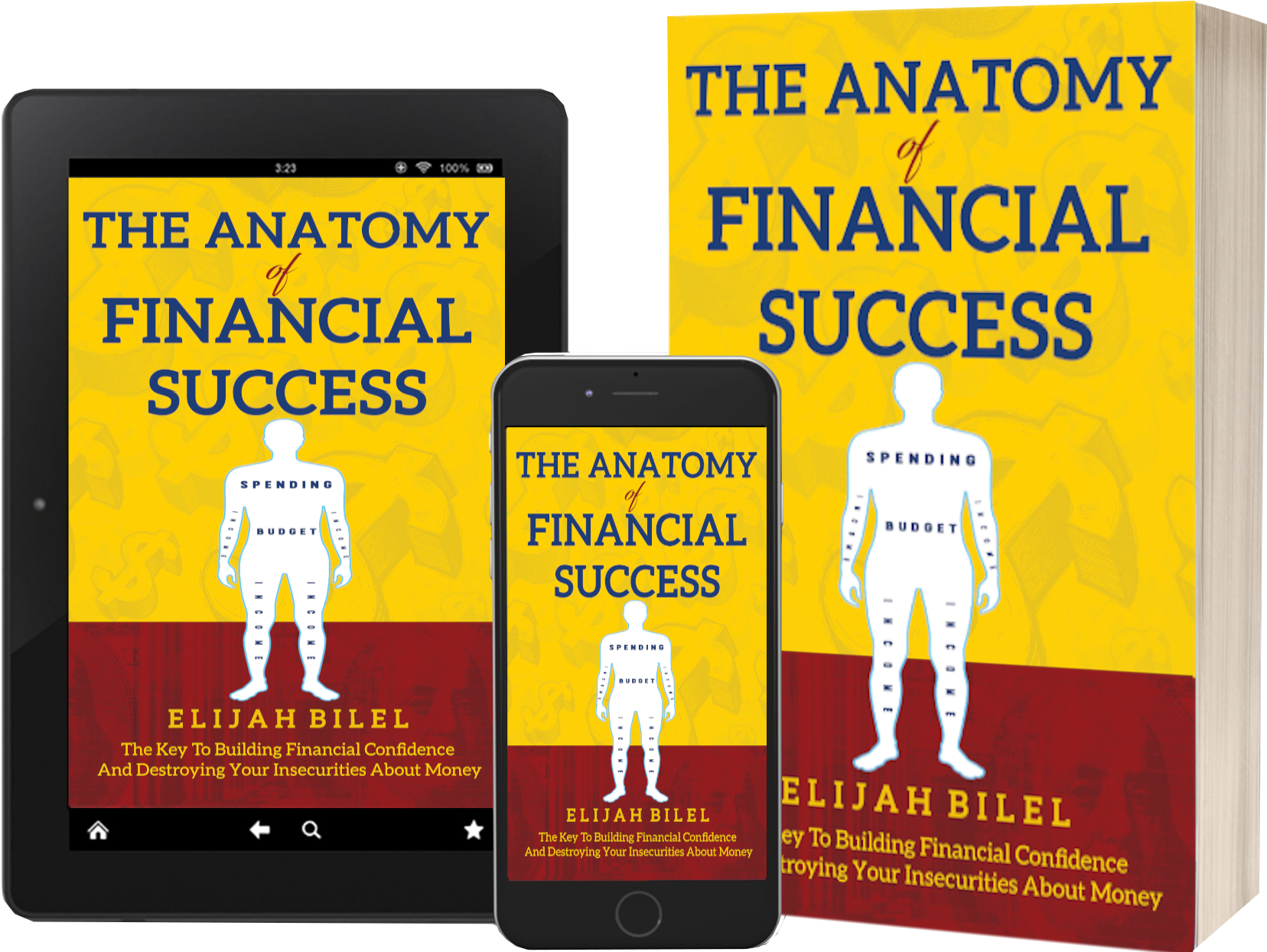
Want to listen to Elijah’s audiobook on personal finance? Click the picture below!
2. Silence Is Golden
I kind of jumped the gun, but second reason is, it's silent. No one else is in the car, listen to whatever you want. Listen to YouTube videos like the one at the top of this article about how to make more money or listen to ways to improve your health. You can listen to whatever rocks your boat. In my case, I can listen to the audio book while I'm just laying in my bed, or maybe while I'm working on my computer, but I don't like to listen to audio books when I'm doing work on a computer because I can't really give my full attention. I like to listen to music or something in the background. Uber Eats is perfect because there's nothing involved mentally. So reason one and two are kind of piggybacking off of each other, because you just listen to all these audio books and you can just really focus on soaking that game up. At the same time you can be delivering food and making money in a process. Since it's so mindless, it's not distracting you from the content of the audio book, it's beautiful.
For those of you that want to talk on the phone while you're delivering, I do that all the time too. Me and my friend Travis will be talking about all kinds of stuff while we're delivering food, because he was delivering for Uber Eats too.
3. $15+ An Hour Earnings
The third reason why I became an Uber Eats driver is you can make more than $15 an hour if you know what you're doing. What I mean by that is if you just do the stereotypical thing that everyone does, you might not make $15 an hour, but if you know how the Uber Eats algorithm works, you know exactly what restaurants to go to, which ones don't have long wait times, so you can get more deliveries in an hour. These are some tips of many, but if you know things like that, then it's not a stretch to make over $15 an hour, because you have the experience to do so, and also doing it is not that hard.
4. You’ll Learn Your City
The fourth reason why I became a Uber Eats driver, why you might want to consider it, is because you learn a lot about your city. See, when you're being a Uber driver this is true too, but you might be more focused on the person in the back, and not as much on your city. Since there's nothing else distracting you, you're going to notice things about your city. If you're like me, you'll still be listening to that audio book, but you can't help but notice things about your city that you didn't before. And if you are new to your city, this is a great way to learn a city.
You do a few deliveries for a little bit and you’ll know that city a lot better than when you first started. Sometimes that's just a better feeling. Knowing what streets to take and what's the fastest way to get to point A to point B. Just going to various parts of your city that you didn't even know existed because you didn’t have reason to go there, but delivery took you there. It's like, "Whoa, oh man, I just didn't know this."
For those of you that are house seeking, you might bump into a few houses for sale. You can write down the owner's information when you look at a sign and you call them up. You might actually find the perfect home for you. You get exposed to so much stuff. It's lost under your radar when you're just casually driving, but when you're delivering, you tend to pay attention more because you're trying to find a address. So you'll learn a lot more about your city.
5. You’ll Learn About A Lot Of New Restaurants
Speaking of learning about the city, number five is you'll learn a lot about restaurants. If you're like me, when I drop food off, I would ask the customer, "Hey, is that restaurant good?" And they would say, "Hey, yeah, it's pretty solid." Or "It's okay." Obviously, it's got to be decent, otherwise they wouldn't be ordering it. If they're a chatty person, they may actually share some details and you could also talk to the restaurants themselves. Obviously they're going to have a bias opinion, but you could ask them if they have certain things on the menu, or you can take a look at their menu while you're waiting for customer’s order. I've been a vegan for over 10 years, and I'll look at these menus of these restaurants. I'm looking for meat substitutes, like tofu, or seitan, Beyond meat or veggie burgers. I’ve learned a lot about various restaurants across my metroplex because you got to go there and pick the food up.
As someone who's a leader and founder of a vegan meet-up group called The Veggie Outers, where we go to restaurants and actually review them based on the vegan options they have, that was very helpful.
A picture of The Veggie Outers
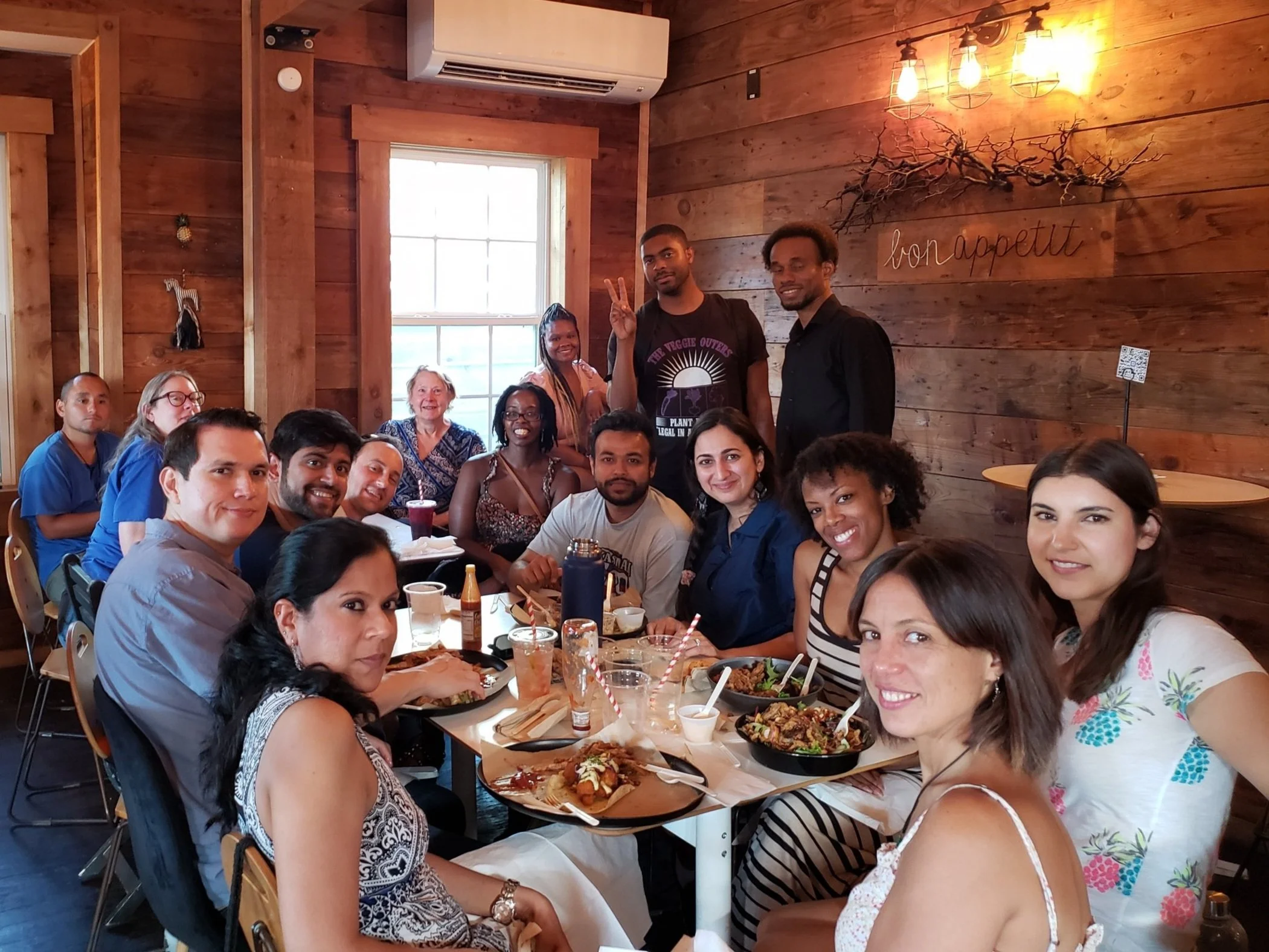
A lot of the restaurants that The Veggie Outers went to, they were based on me going there as an Uber Eats driver first, scaling their menu, and then I went there to actually try them out. I was like, "Hmm, this is a great place to bring The Veggie Outers." And that resulted in a lot of meet-ups that might not have happened otherwise. I got exposed to the restaurant through Uber Eats. So you'll learn a lot more about restaurants.
So to recap, we have number one, it's mindless. Number two, it's silent. Number three, you can make more than $15 per hour if you know what you're doing. Number four, you're going to learn more about your city. And number five, you're going to learn more about your restaurants in your city too.
I honestly can't recommend it enough. If anything, because of reasons one and two, because it's just an excuse to consume so many audio books. Whatever area of life that you're struggling in, finances, health and wellness, relationships, just grab some audio books on that, and get paid to lace yourself up with game in that area. If you are looking to get started, you’ll want to check out the podcast I did sharing 10 tips that help you make the most money in the least amount of time. That video is shared above reason 4. That’s it for now. I’ll catch you in the next article!
SHS013: Is The Gig Economy A Drug? (Uber Drivers, Uber Eats Drivers, Doordash Drivers)
Intro
The gig economy has helped millions of people make money quickly—but what if it’s also keeping people stuck?
In this solo episode of The Side Hustler’s Society, Elijah Bilel breaks down a controversial idea:
👉 Is the gig economy actually addictive?
Drawing from years of firsthand experience, Elijah shares how gig work can be both an opportunity and a trap—and how to use it the right way.
Track Your APP Earnings As A Gig Worker efficiently!
Track your earnings and app expenses using The FREE App Lifestyle Pay Spreadsheet! Compatible with google spreadsheets! Click here to join out newsletter and get started!
Episode Overview
Elijah opens the episode by explaining how the definition of the gig economy has evolved over time.
What used to mean freelancing—like photography, plumbing, or design—has now become associated with app-based work like Uber, DoorDash, and Instacart.
While these platforms make it easier than ever to earn money, Elijah argues that they also introduce a hidden risk:
👉 The way you make money can become a habit—and even an addiction
He references a concept inspired by Rich Dad Poor Dad—that earning income in a certain way can create a cycle that’s hard to break.
You work → you get paid → you feel in control → you repeat.
Over time, that loop can make it difficult to transition into better opportunities—even when they’re available.
Listen to the Episode
Check us out on Apple Podcasts or Spotify! While you’re there, hit subscribe so you don’t miss our latest episodes!
Side Hustler’s Society Resources
The Anatomy Of Financial Success Audiobook
Gig Economy Mastery Free Course
Quick Takeaways
Elijah explains how the gig economy evolved from freelancing into app-based work
Making money in one way can become addictive over time
Elijah Bilel shares that gig work should be temporary—not permanent
The flexibility of gig work is its biggest advantage
Many gig workers fail because they don’t have a long-term plan
You need to transition from earning money to building income systems
Gig work can fund your next move—but shouldn’t be the final destination
Learning new skills is essential for long-term growth
Control over your schedule is a powerful but underused advantage
Most people stay in the “in-between stage” longer than they should
Elijah’s Personal Experience in the Gig Economy
Unlike many people who talk about the gig economy from the outside, Elijah speaks from real experience.
Over 4,000 food deliveries completed
Around 500 rideshare trips
Worked in the gig economy both part-time and full-time
This gives Elijah Bilel a unique perspective on how the system actually works—not just in theory, but in practice.
He explains that while gig work can be effective short-term, it’s not designed for long-term stability.
The Real Problem: No Exit Strategy
One of the biggest issues Elijah highlights:
👉 Most gig workers don’t have a next step
People enter the gig economy during:
Financial stress
Career transitions
Unexpected life changes
But instead of using it as a temporary solution, many stay stuck in it for years.
Elijah emphasizes that the gig economy should be:
👉 A bridge—not a destination
How Elijah Used the Gig Economy the Right Way
Elijah didn’t just work in the gig economy—he used it strategically.
He created a clear plan:
Use gig work to generate income and free time
Start a YouTube channel focused on gig economy content
Monetize through referrals and ads
Transition into personal finance content (Financial Anatomy)
Use that income to move into Airbnb and real estate
That plan turned into:
A successful YouTube brand
Freelance income (video editing & digital services)
Airbnb income streams
Multiple income sources totaling over $8,000/month
This is a perfect example of using the gig economy as a launchpad, not a lifestyle.
Key Lessons from the Episode
1. The Gig Economy Is a Tool—Not the Goal
The biggest mindset shift:
👉 Don’t build your life around gig work
Use it to:
Create cash flow
Buy time
Fund your next move
2. Flexibility Is the Real Advantage
The true value of gig work isn’t just money—it’s control.
You control:
Your schedule
Your hours
Your time
And that time should be used to:
👉 Learn skills that can increase your income
3. Income Habits Can Hold You Back
One of the most powerful ideas from Elijah:
👉 You can get addicted to how you make money
This makes it harder to:
Learn new skills
Try new opportunities
Step into something bigger
4. You Need a Plan From Point A to Point B
Elijah Bilel stresses the importance of having a roadmap.
Without a plan:
You stay stuck
You repeat the same cycle
You delay your growth
With a plan:
Every hour worked has a purpose
Every dollar earned has a direction
5 Tips to Transition Out of the Gig Economy
Elijah closes the episode with actionable steps:
1. Gradually Reduce Your Hours
If you’re working 60 hours:
👉 Drop it by 5 hours each month
This creates space to build something new.
2. Learn While You Work
Use your time in the car wisely:
Podcasts
Audiobooks
Educational content
Turn driving time into learning time.
3. Focus on Skill Development
Pick a direction:
Freelancing
Trade skills
Content creation
Business
And start building expertise.
4. Create a Long-Term Plan
Ask yourself:
👉 What is this leading to?
If you don’t have an answer, that’s the problem.
5. Build Stable Income Streams
Elijah breaks income into two types:
Steady income (predictable, stable)
Unsteady income (high highs, low lows)
Focus on building steady income first:
Freelancing
YouTube ad revenue
Airbnb
Who This Episode Is For
Gig workers feeling stuck
People doing Uber, DoorDash, or Instacart full-time
Anyone looking to transition into entrepreneurship
Side hustlers who want to build long-term income
Key Topics Covered
How Elijah Bilel views the gig economy
The hidden downside of gig work
Building a transition plan
Creating multiple income streams
Escaping the “income loop”
Watch The Podcast On Youtube!
SHS 012: Maximizing Tax Deductions For Gig Workers & Freelancers With The Finance Rebel Camari Ellis
Intro
Taxes are one of the biggest blind spots for people in the gig economy.
Most people start a side hustle focused on making money—but don’t realize that how you handle taxes can determine how much of that money you actually keep.
In this episode of The Side Hustler’s Society, Elijah Bilel sits down with tax expert Camari Ellis to break down how gig workers and freelancers can approach taxes the right way.
Track Your APP Earnings As A Gig Worker efficiently!
Track your earnings and app expenses using The FREE App Lifestyle Pay Spreadsheet! Compatible with google spreadsheets! Click here to join out newsletter and get started!
Intro to Camari Ellis
Enrolled Agent and Tax Advisor
Financial strategist with over 20 years of experience
Founder of the Philly Tax Team
Known as “The Finance Rebel”
Camari specializes in helping:
Gig workers
Freelancers
Entrepreneurs
Understand taxes, reduce liabilities, and build smarter financial systems.
The Finance Rebel Podcast: https://podcasts.apple.com/us/podcast/the-finance-rebel-show/id1522544501
Episode Overview
This episode is a replay of an interview Elijah did with Camari Ellis, and the insights are still extremely relevant today.
Camari explains that one of the biggest mistakes people make is misunderstanding their role in the gig economy:
👉 You are not just a “gig worker”—you are a business owner
That shift in mindset changes everything:
How you track money
How you file taxes
What deductions you can take
Elijah also highlights an important timing mistake:
👉 Most people think about taxes too late
Instead of waiting until tax season, this episode emphasizes:
Planning ahead
Tracking throughout the year
Making strategic decisions before the year ends
Listen to the Episode
Check us out on Apple Podcasts or Spotify! While you’re there, hit subscribe so you don’t miss our latest episodes!
Side Hustler’s Society Resources
The Anatomy Of Financial Success Audiobook
Gig Economy Mastery Free Course
Quick Takeaways
Taxes are not automatically taken out—discipline is required
Planning your taxes ahead of time is more powerful than reacting later
Most tax strategies apply to both gig workers and freelancers
Tracking expenses consistently is critical
Understanding deductions can significantly increase your take-home income
Side hustles can evolve into full businesses
Networking through your hustle can create new opportunities
Tax strategy is just as important as making money
Financial education compounds over time
Key Topics Covered
1. The Mindset Shift: Employee → Business Owner
One of the most important points Camari makes:
👉 When you enter the gig economy, you become a business
That means:
You are responsible for your taxes
You control your expenses
You can leverage tax strategies
2. Why Most Gig Workers Get Caught Off Guard
A common mistake:
👉 Not setting aside money for taxes
Unlike a 9–5 job:
No automatic tax withholding
No built-in system
This leads to:
Unexpected tax bills
Financial stress
3. Tax Planning vs Tax Filing
Most people focus on filing taxes.
But Camari emphasizes:
👉 The real advantage comes from planning
That includes:
Knowing deductions ahead of time
Tracking expenses throughout the year
Making decisions before December 31st
4. Deductions Gig Workers Should Know
Camari breaks down several common deductions:
Mileage
Gas and vehicle maintenance
Business-related meals (in specific situations)
Marketing materials
Supplies (water, snacks, etc. for customers)
These deductions can significantly reduce taxable income when used correctly.
5. Turning a Side Hustle Into a Real Business
A powerful insight from the episode:
👉 Your side hustle can evolve into something bigger
For example:
An Uber driver could build a private client base
A freelancer could scale into an agency
This is where:
Branding
Networking
Strategy
Start to matter more than just doing the work.
Key Lessons from the Episode
1. You Keep More by Knowing More
Making money is only half the equation.
👉 Keeping it comes down to strategy
2. Systems Beat Motivation
Tracking:
Income
Expenses
Deductions
Should be systemized—not left to memory.
3. The Earlier You Learn This, The Better
Most people learn about taxes after they’ve already made mistakes.
This episode helps you:
👉 Get ahead of that curve
Who This Episode Is For
Gig workers (Uber, DoorDash, Lyft, etc.)
Freelancers and independent contractors
Anyone starting a side hustle
Entrepreneurs looking to optimize taxes
Watch The Podcast On Youtube!
SHS011: How Jacob & John Makes $10,000 A Month Selling Merch And T-Shirts!
Intro
Starting a clothing brand is one of the most popular business ideas—but also one of the most misunderstood.
A lot of people jump in using print-on-demand platforms, thinking that’s the full picture… but there’s a completely different level to this business when you understand manufacturing, branding, and positioning.
In this episode of The Side Hustler’s Society, Elijah Bilel sits down with fashion designer and entrepreneur John Thomas to break down how to actually build a clothing brand from the ground up.
Subscribe To Elijah's New Youtube Channel, Social Dynamics
Find out the different ways that Elijah teaches to grow your network, plan events with big turnouts and advance in your career by cultivating the right relationships. Click here to join out newsletter and get started!
Intro to John Thomas
Fashion designer and entrepreneur with experience dating back to 2014
Founder of clothing brands including Fly Forever and Jacob & John
Holds an associate degree in fashion design and a bachelor’s in merchandising design
Also earned a master’s degree in finance
Opened his own physical clothing store and built a growing fashion brand
Featured in major publications like Vogue
Website: https://jacob-john.com/
Episode Overview
This episode dives into what it really takes to go beyond basic merch and build a legitimate clothing brand.
Elijah opens by explaining the difference between:
Print-on-demand (like Teespring or Spreadshop)
And building a full-scale clothing business with manufacturing and higher margins
While print-on-demand can be a great starting point, John Thomas represents what it looks like to take things to the next level.
John shares how his journey started with a passion for fashion at a young age—customizing clothes with friends—and eventually led him to pursue formal education in design.
Over time, he built his first brand, Fly Forever, but ran into a major challenge:
👉 It wasn’t differentiated enough in the market
That realization led to a pivot—and the creation of his current brand, Jacob & John, which is built around a more personal and intentional identity.
Elijah Bilel highlights this as a key entrepreneurial principle:
👉 Sometimes your first idea isn’t the final version—it’s just the starting point.
Listen to the Episode
Check us out on Apple Podcasts or Spotify! While you’re there, hit subscribe so you don’t miss our latest episodes!
Side Hustler’s Society Resources
Financial Personality Success Bundle
Side Hustle to Full-Time Strategy Session
Get The Side Hustler's Society Merch!
Quick Takeaways
Elijah explains the difference between print-on-demand and full clothing brands
John Thomas built his brand by combining education with real-world experience
Your first business idea may not be your final one
Elijah Bilel emphasizes the importance of evolving your approach over time
Knowing your target market is critical in both fashion and business
Product placement can make or break your success
Learning the business before investing heavily can save money
Networking and environment play a huge role in growth
Multiple income streams (like Airbnb) can support your business journey
Success comes from consistency, not perfection
How He Built His Clothing Brand
1. Started with Passion, Then Got Educated
John’s journey started with creativity—but he took it further by learning the technical side of fashion.
He explains that while school helped him:
👉 You don’t have to go to school—you just need knowledge
You can learn through:
YouTube
Books
Internships
Hands-on experience
2. Pivoted When the Market Gave Feedback
One of the biggest turning points:
👉 His first brand wasn’t standing out
Instead of quitting, he:
Rebranded
Made it more personal
Built a stronger identity
That’s how Jacob & John was created—named after himself and his son.
3. Focused on Target Market
John emphasizes:
👉 If you don’t know who you’re selling to, you won’t sell
This applies to:
Clothing brands
Airbnb
Any business
Elijah connects this to his own Airbnb strategy—designing properties specifically for business travelers.
4. Learn Before You Spend
One of the most practical lessons:
👉 This business can get expensive fast
John recommends:
Learning materials and fabrics
Understanding manufacturing
Knowing how to communicate with suppliers
Before investing heavily.
5. Placement Matters More Than You Think
A powerful concept from the episode:
👉 Your product needs to be in the right environment
John shares how being featured in Vogue helped elevate his brand and reach the right audience.
Elijah Bilel connects this to a classic business principle:
👉 It’s not just about what you sell—it’s where you sell it
Key Lessons from the Episode
1. Your Environment Can Accelerate Your Growth
Both Elijah and John highlight how being around the right people:
Creates opportunities
Provides insight
Speeds up learning
2. Multiple Income Streams Give You Flexibility
John shares how Airbnb income helped support him during uncertain times.
This reinforces a major theme:
👉 Side hustles can fund your bigger vision
3. Document Your Journey
A key insight from John:
👉 People want to see the process—not just the result
Sharing your journey:
Builds trust
Grows your audience
Creates opportunities
Who This Episode Is For
People interested in starting a clothing brand
Entrepreneurs looking to move beyond print-on-demand
Creators building a fashion or product-based business
Side hustlers looking to scale into a full business
Key Topics Covered
How Elijah Bilel approaches product-based businesses
Building a clothing brand from scratch
John Thomas’ journey into fashion design
Target market and product placement strategies
Scaling beyond basic merch
Watch The Podcast On Youtube!
SHS010: How To Make $9000 A Month As A Vendor Selling Products With It's Butter Baby!
Intro
Some of the oldest ways to make money are still some of the most effective.
Long before online businesses and digital products, people made money by simply putting products in front of people and selling them. Today, that same concept exists in the form of vendor events—and it’s still one of the most powerful ways to generate income.
In this episode of The Side Hustler’s Society, Elijah Bilel sits down with entrepreneur Isa Jacqueline to break down how to build a product-based business and consistently make money both online and offline.
Subscribe Now And Get Chapter 5 Of The Best Selling Book, The Anatomy Of Financial Success!
Find out about the different types of income there are and which one(s) are best for you based on your personality! Click here to join out newsletter and get started!
Intro to Isa Jacqueline (It’s Butter Baby)
Founder of It’s Butter Baby, a natural skincare brand specializing in shea butter products
Over 15 years of experience in business and self-employment
Built a loyal customer base through vendor events, word-of-mouth, and product quality
Offers over 60+ shea butter variations using natural ingredients sourced globally
Focuses on holistic skincare solutions for issues like eczema, blemishes, and dry skin
Known for strong customer relationships and repeat business
Website: https://itsbutterbaby.com/
Episode Overview
This episode breaks down how a simple idea—selling products—can evolve into a long-term, sustainable business.
Elijah introduces the concept of vendor events as one of the oldest forms of entrepreneurship, dating back to ancient marketplaces where merchants sold goods in high-traffic areas.
Isa Jacqueline’s journey reflects that same model—just modernized.
She shares how It’s Butter Baby wasn’t originally planned as a business. Instead, it started organically after years of working in corporate roles where she felt stuck and unable to grow.
After seeking change, she unexpectedly found herself building a product that people genuinely loved—and that changed everything.
Elijah Bilel connects this to a bigger idea:
👉 Sometimes your business doesn’t start with a plan—it starts with a problem and evolves through action.
Listen to the Episode
Check us out on Apple Podcasts or Spotify! While you’re there, hit subscribe so you don’t miss our latest episodes!
Side Hustler’s Society Resources
Financial Personality Success Bundle
Side Hustle to Full-Time Strategy Session
The Anatomy Of Financial Success Paperback
Quick Takeaways
Elijah emphasizes that vendor-style selling is one of the oldest and most effective business models
Isa Jacqueline built her business through both online and offline sales channels
Product-based businesses can start organically without a clear initial plan
Elijah Bilel highlights that taking action often leads to unexpected opportunities
Vendor events can be highly profitable if chosen strategically
Word-of-mouth marketing is still one of the most powerful growth tools
Customer feedback can directly shape your product line
Quality products lead to repeat customers and long-term success
You should never rely on just one income channel
Business growth comes with phases—just like a relationship
How She Built a Product-Based Business
1. Started Without a Perfect Plan
Isa didn’t start with a fully mapped-out business.
Instead, It’s Butter Baby came from:
A desire for change
A willingness to try something new
Letting the process unfold over time
2. Focused on Product Quality First
One of the biggest reasons for her success:
👉 The product works
She uses:
Natural ingredients
Globally sourced shea butter
No chemical-based additives
This creates a product that:
Solves real problems
Builds trust with customers
Generates repeat business
3. Built Through Vendor Events
Vendor events became a major growth driver.
Isa explains that success comes from:
Choosing the right events
Understanding your audience
Positioning your product correctly
She also highlights something many beginners overlook:
👉 Sometimes you have to pay to be at events—but the return can be worth it if done right
4. Sell Everywhere, Not Just One Place
A key strategy from the episode:
👉 Don’t rely on one income stream
Isa sells:
Online through her website
At vendor events
At private events (weddings, parties, etc.)
Through direct customer relationships
This diversification creates stability and growth.
5. Let Customers Shape the Business
One of the most unique aspects of her brand:
👉 Customers help create the products
Isa listens to:
Customer requests
Preferred scents
Feedback on performance
This led to:
60+ product variations
Strong customer loyalty
A community-driven brand
Key Lessons from the Episode
1. Your Business Will Evolve Over Time
Isa compares building a business to a relationship:
It starts exciting
You learn as you go
You face challenges
You grow stronger over time
This is a realistic look at entrepreneurship that many people don’t talk about.
2. Word of Mouth Is Still King
One of the biggest drivers of her success:
👉 Happy customers tell other people
This leads to:
Organic growth
Lower marketing costs
Stronger brand trust
3. Go Where the People Are
Instead of waiting for customers to find you:
👉 Put your product in front of them
This is why vendor events work so well:
High traffic
Immediate feedback
Direct sales opportunities
Who This Episode Is For
People interested in starting a product-based business
Entrepreneurs looking to sell at vendor events
Anyone wanting to build a physical or natural product brand
Side hustlers exploring offline income opportunities
Key Topics Covered
How Elijah Bilel approaches product-based businesses
Building a brand like It’s Butter Baby
Vendor event strategies
Customer-driven product development
Creating multiple income streams