5 Reasons To Become An Uber Driver In 2026
Being an Uber driver has become highly controversial in today's time. Can you make a lot of money with Uber or are you actually losing money? Is it safe, or is it probably the most dangerous thing you can do? Well in this article, I'm going to give you five reasons why I became an Uber driver and why you might want to consider it and if these reasons align with what you want.
As someone who has done it for a while and has a whole separate channel on how to be successful with Uber and Uber Eats, I say I'm qualified to talk about it. Unlike certain people on YouTube and the web who just talk about these numbers, but haven't actually got behind the wheel, driven a few people around, and had the experience themselves. So if that interests you, stay tuned and stick around to the end, where I'll be sharing with you exactly how being an Uber driver actually played a role in me making money, how I do nowadays. So, let's get into it!
I'll say this right off the bat. That there's a lot of negative criticism of this way of making money on floating around out there. Some of it comes from drivers, but some of it comes from people who have actually never done it before. I'm just going to be honest, I don't think they're really qualified to talk about it. They'll run these numbers and say that, "Hey, you're losing money per mile," but they don't know a few factors:
They don't know if you're starting your own business and while you're taking people to their destination, they ask what you do. Conversation happens and you just got yourself a new client.
They're not taking into consideration that you just quit your full-time job, you're pursuing something on the side and now you have the time to fully develop that skillset or pursue what you want to pursue.That means within a year or two, you've actually stopped being an Uber driver, because that allowed you to have that opportunity to pursue that.
They don't talk about that probably because they can't relate to it, and if we're going to be honest, the reason they can't relate to it is because they've never done it. All they can do is crunch these numbers in front of you, so I'm here to tell you the other side of the coin, as someone who is in the personal finance niche and someone who actually was behind the wheel, when it comes to being an Uber driver.
Let's get into it and for those y'all that are thinking that I'm saying all of that because I want to get referral money, well, guess what? Uber has changed their policies so that no one person can receive more than 50 referrals. I have more than 50 referrals so I don't qualify to get referral money. In other words, this is someone that's not being financially incentivized either. It's just a personal view and recommendation based on my experience. So let's go ahead and get into it.
1.You make money driving

The 1st reason why I became an Uber driver and why you might want to consider it, if this lines up for you is the obvious one. You make money to drive. Now the rate's going to vary depending on your particular market, but at the end of the day, you're making money to drive and driving is something that most of us have to do in our everyday lives, anyway. Why not just monetize that thing that you're already doing. Regardless of what you hear about it, it's still a way to make money strictly from driving and you could always test it out in your market to see.
2. You make money from socializing
That's a soft transition into our second reason which is, you can make money while socializing. This a great if you're a very sociable person or an extroverted person. Even if you're an introvert, you can still like talking to people. A lot of people think that just because you're introverted, you don't like talking to people. Introverted just means you get your energy from being solitary. In other words, you need your alone moments so that you can recharge. That's all it means. You still might like talking to people and if that's the case, this is something that you're going to enjoy because people get in your car and most people are very chatty and they want to tell you about their day or ask what you do or how your day's been.
And this is an honorable mention, or really just an extension of this one, but if you have other ways of making money, then they're going to ask you what you do anyway. You share what you do, a lot of times they may actually have a need for that service or product that you're selling. I've gotten clients and even sold product strictly just off of people in the back of my car as an Uber driver. They're going to ask you anyway. I say, don't be pushy or bring it up, but most of them ask any way. Share it, and if they're intrigued, they'll ask you more that might even result in a few sales of your services or products.
See, that's something that people online that haven't driven won't actually share, because they haven't done it. Which is ironic to me because a lot of these people were in sales or they have services to offer so they would actually benefit greatly from doing it. They can get some new clients. I just find that ironic that they just crunch the numbers, how much you're making per mile when you can make more money from the service that you offer outside of Uber and they are perfect candidates. They would know that if they actually drove.
3. You’ll know what’s happening in your city

The third reason I became an Uber driver and why it might be appealing to you is because you get the inside scoop of what's going on in your city. I don't care what anyone says. If you become an Uber driver, you're going to know what's going on in your city. Why? Because you're going to be taking people to these events and they're going to be telling you about "This is happening," or "that's happening." Or if someone else is in the car, let's say you're taking a couple or some friends while they're having a night out on the town, they're going to be talking about what they're doing all this weekend or next weekend. You're going to quickly realize, "Man, all this stuff is going on in my city. Do I actually want to attend?" Just something to think about.
To be honest, this is one of the parts that I've really enjoyed about it. I mean, I just have the fond memories of taking people SMU students, which is a college in Dallas in my market from point A to point B while they're having a night on the town. Now I've had plenty of interesting conversations with the SMU students, the typical frat boys where we're talking about ... well, what do you think a bunch of young males are going to be talking about?
4. Freedom & Flexibility
The fourth reason, and probably the most stereotypical is the freedom and the flexibility. You get to work whenever you want and however you want. You might be wondering exactly what do you mean by however you want? You’ve likely heard A lot of the dangerous stuff about being an Uber driver. As far as the crazy YouTube videos that have no shortage on this platform, I'm not going to lie and say, none of that stuff happened. It did happen but I will say that, most of it tended to happen at night. This makes me think that it probably happened during the bar rush. The bar rush is between 10:00 PM and 2:00 AM. That's when you're taking people to and from the bars. When you're transporting drunk people, there's money there because there's going to be a lot of surge, but you run the risk of running into that kind of stuff.
If you don't want to deal with those types of people because of that scenario that I told you about, you can just take people to and from airports. I know people who do strictly airport runs. They don't take people around the city or none of that. They take someone from the airport, then they put their destination filter on, which filters out certain requests, to try and get a request back to the airport. Then they repeat. There are people that do that and they make great money and they don't have to deal with all that stuff. You know, the stuff that you see on YouTube as far as a dash cam and videos. When you're dealing with people going to and from airports, by default, they usually a more affluent crowd. Lawyers, CEOs, bankers, families going on vacation, stuff like that. They're just are a better quality of customer, if I'm being honest.
I actually have gotten my highest tips from people coming from the airport, too. The reason being is they're going to be in your car for a while, usually, because they're going far. If you got a great personality and social skills, you're going to talk their head off and they're going to appreciate it and show you with the tip.
5. Work hard or don’t
The fifth and final reason why I became an Uber driver and why it might be appealing to you, is because you can work as hard or as little as you want. There are people who are part-time drivers and people who are full-time drivers. As someone that's been both sides of the spectrum, I started out part-time, then I went full time and went back to part-time when some of the stuff I was telling you about started taking off. I can honestly say that it's just beautiful to have that ability, to work as hard or as little as you want.
A lot of times you can use it to compliment something you're already doing. Sometimes I might be having a night on the town myself, so I'm heading to central Dallas around 10:00 PM. Well, I live in the suburbs so I can just put on the destination filter and put it to Central Dallas. I often end up getting a group of young people who are on their way to Deep Ellum. I just take them to Deep Ellum, then I go out to my own night on the town. That means I got paid to drive to Dallas, which is what I was doing anyway! That's the flexibility coming in and I just love it.
Being an Uber driver helped me launch what I'm doing now and the reason it helped is because this is what I was doing largely while I was building my online business. Now I did have things that I could've sold, but I really just liked being an Uber driver. I just kept doing it while I was building this on the side. I gradually started putting less hours in being a driver with Uber and putting more hours into making money in the ways I'm doing now. Eventually the scale tips, so that I'm doing this more than being an Uber driver.
Those are five reasons why I recommend being an Uber driver. If those reasons are something that you can get behind, I still recommend it. Now if you looking for some kind of sign-on bonus, a guarantee, I would recommend you find someone locally, sign up with them because maybe both of y'all could benefit for something.
One of things that I love about being a rideshare driver is the ability to listen to audiobooks and podcasts in between rides. If you decide to become an Uber driver, you’ll get a lot smarter if you do this. If you find yourself becoming an audiobook junkie (Like me), you can listen to my personal finance book for free on Audible here. That’s it for this article. I’ll catch you in the next one!
5 MUST Read Financial Books For Young Adults In 2026
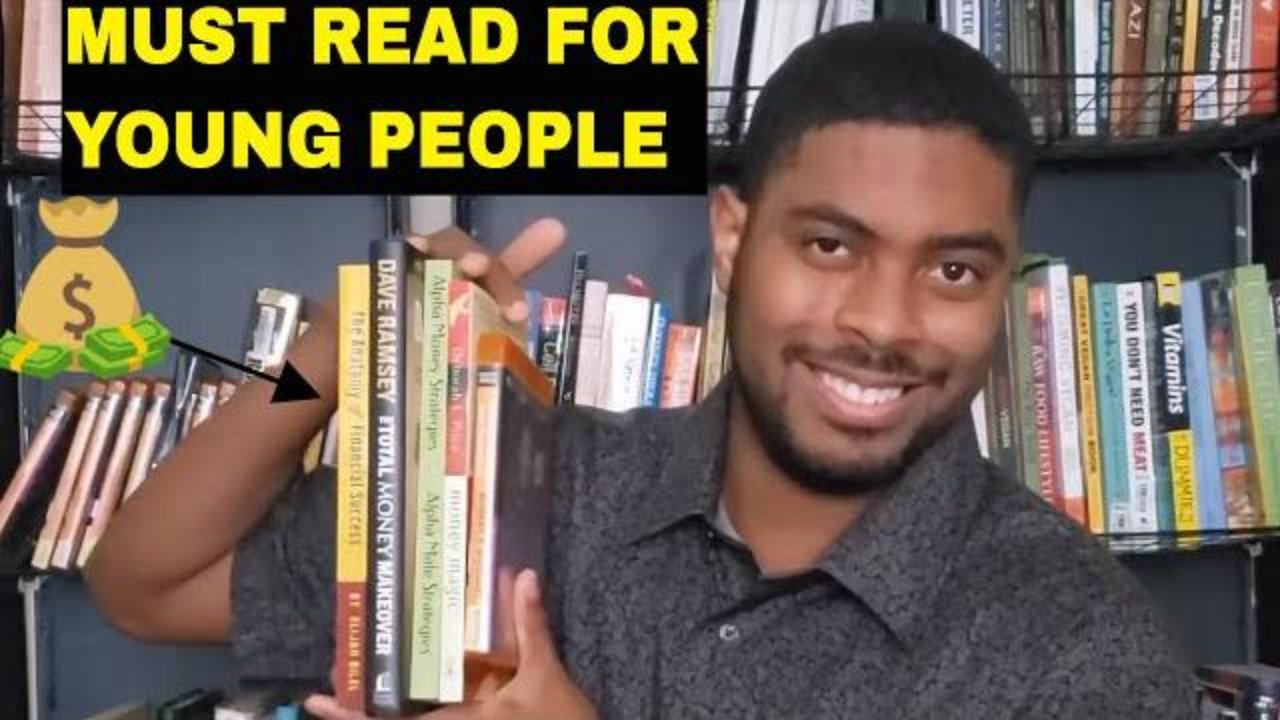
There are so many books come out nowadays, but how do you know which ones actually give you a strong foundation in personal finance? Which ones give you the strong foundation so that any other financial book you read afterwards, you can put it in its right place and use the information? What are five books that lay a firm foundation for young people to build off of since the school system has failed to do so? That's what we are going to address in this article! Not in the mood to read? Feel free to watch the video below instead!
Since the school system does not teach you about financial literacy for the most part unless you're a major in college like business or accounting, these books can also serve as financial basics or financial education that you can just use to build a solid foundation. Any more information on finances you get from there, you can really build off of as opposed to you read or listen to a book and a lot of it goes all over your head or over your head because you don't have anywhere to effectively put it because you haven't had enough exposure.
1. The Anatomy Of Financial Success: The Key To Building Financial Confidence And Destroying Your Insecurities About Money
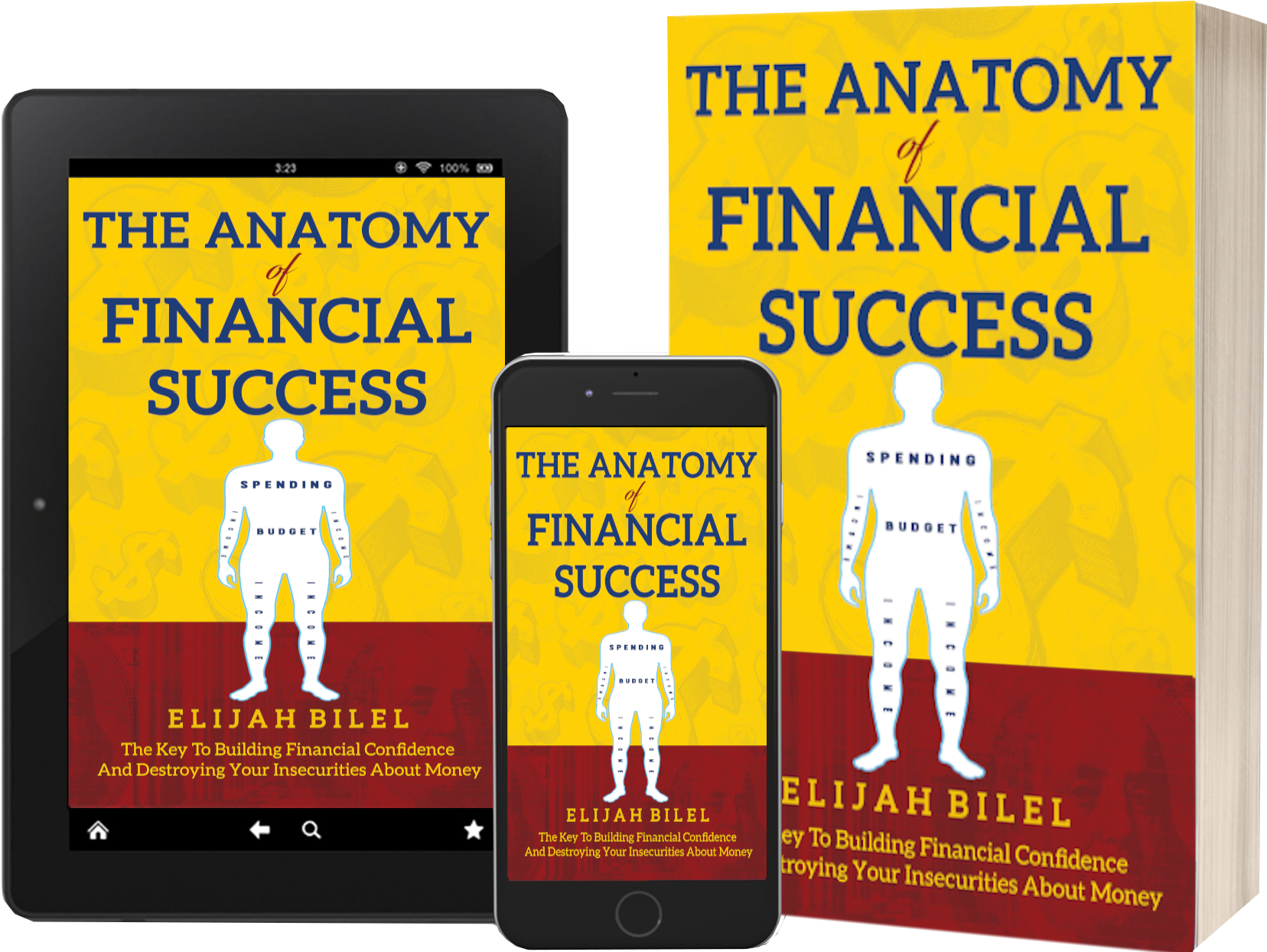
1st on our list is The Anatomy of Financial Success: The Key To Building Financial Confidence And Destroying Your Insecurities About Money written by yours truly, Elijah Bilel. You're going to say that's a bias putting your own book at first. Being honest though, this book was written specifically for young people because there's two aspects that young people get screwed over in financial society. First one is the school system has failed us.
They don't teach us about finances in school. We know this, but there's a higher component. I don't see many if any financial books that really take your personality into consideration when assigning financial techniques, tactics or ways of doing things when it comes to making money, income, budgeting and spending money. There are techniques that are going to work best for your personality that won't work for me and vice versa.
The Anatomy of Financial Success dives into those techniques, shows you what they are and the six personality types that inhabit the financial world as well as which one you are. From there you can find out what is the best type of income that is best for you to make based on your personality and your emotional wants and needs.
You can find out what's the best way to budget your money as well as your emotional strengths and weaknesses as we all have aspects of budgeting where we just spend money automatically. Like I just spend money here by default but in other areasI may hesitate.
The 6 areas referred to are:
Donations
Business (If you have one)
Investments
Self Spending
Expenses
Savings
We're going to focus on the last four because donations and businesses, they don't come to play here. Out of the last four, two of those you just spend automatically, they're your emotional strengths. The other two of them, you're more emotionally weak in and for whatever reason you may hesitate to spend there. In order to achieve financial success, you need to figure out how to spend that money in a way that you keep moving forward financially. The Anatomy of Financial Success goes into the science of that.
In addition to that, once you know your personality, you're going to be bombarded with financial opportunities throughout your life, whether they're presented to you or you go out trying to look for them. You you need to know your financial personality so you can figure out if that opportunity is going to be good for you based on that personality. If you pick the wrong opportunity, you're going to burn out and waste your time. You may also not get the results you want versus if you pick the right opportunity, it's a license to print money. That's why I highly recommend The Anatomy of Financial Success.
2. Money Magic
Unleashing Your True Potential For Prosperity And Fulfillment
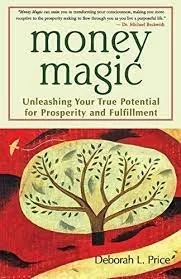
Next up we have Money Magic by Deborah L. Price. Now this book is, it's a different type of book. If I was to put it in a category it's materialistically spiritual. I don't even know if that's a phrase, but it gets into the principles of how to attract money because the whole objective of the book is to become a money magician. You have seven other personalities that you're going to fall in and they all have their pros and cons.
So once you find out what your personality is, you see the flaws that are in there from an emotional perspective when it comes to making money. You then make those corrections. Eventually, you want to become a money magician and then the author lays out a solid foundation that you can build off of based on your emotional strains. This book in particular I feel is a great foundation when it comes to learning some stuff about yourself as far as fundamentals of your emotions go when it comes to making money.
I also like the hierarchy that the book uses which is constructed by 2 pyramids. One is like the spiritual side when it comes to money and the other one is the material side. Anytime you're lacking in one of the tiers on those pyramids, that's saying that area needs more work and they tie it back to the personality that you have. Money Magic also lays the reasons why you shouldn't do certain things with money because it bites you in the butt in a practical way.
3. Increase Your Financial IQ
Get Smarter With Your Money
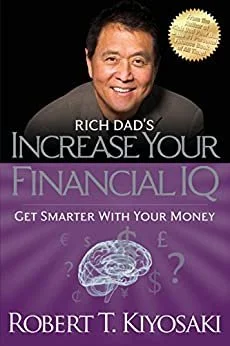
Coming up next is another Robert Kiyosaki book. It's one that's underrated in my opinion and it's Increase Your Financial IQ:Get Smarter with Your Money by Robert Kiyosaki. In this book, he gets into what he calls financial IQ and he breaks it down in five levels and those five levels are:
Making more money.
Protecting your money
Budgeting your money
Leveraging your money
Increasing your access to financial information
Robert lays the details about each one of those and how to strengthen them. A very direct approach towards increasing your financial IQ as he puts it. Those five levels can be used as staples to measure where you're at financially and which one's your weak at. Once you find out which ones you're weak at, you can make adjustments from there.
This one is one of the more detail oriented in Robert Kiyosaki's books. A lot of his books are too conceptual in my opinion. This one is actually more on the detailed side.
4. The Total Money Makeover
A Proven Plan For Financial Fitness
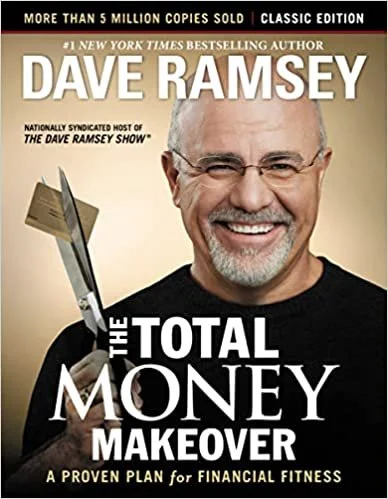
For our 4th book, we have Dave Ramsey's Total Money Makeover. A lot of you all probably expected that to be on this list. Dave Ramsey is a very detailed author and if you listen to the audio book he'll be scolding you the whole time which in itself is worth a good laugh! The point though is to get out of debt and to build wealth and his whole objective is financial peace.
This includes setting yourself up for retirement, setting your savings up and never using debt again in addition to getting yourself out of debt if you're in debt. I say this is a must read because he gives a lot of details on how to do certain things in life without necessarily needing credit. That's a good side to know. Regardless if you decide to use it or not, you should know that side of the equation.
Included are things like getting a lease without them looking at your credit score. If you do it the right way, they'll look at other things as opposed to your credit score. It also includes how to get things in cash and get a discount because most people in the sales field are so used to having to finance thing, that a cash customer is very appealing since they get a commission on the total sale which by default will be higher in that case.
If you walk in there with cash saying that "Hey I want to get this in cash", a lot of times they'll give you a discount and if they don't you could probably negotiate a discount. it's a lot of good game as far as how to live life debt free in general in addition to not just getting out of debt but also not taking it on. You need to know that side of the equation and if you decide to follow that side, it's up to you. Even if you don't, it's just good to know.
5. Alpha Money Strategies
AMS's Guide Towards Financial And Mental Freedom
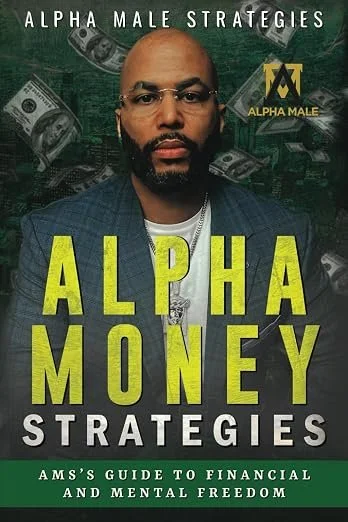
The book to complete out list is Alpha Money Strategies by Alpha Male Strategies. I really enjoy this book and the reason I enjoy it is it's a very direct approach towards being financially successful and I kind of see it as the masculine component of Money Magic. I considered the book Money Magic like the yin or the feminine aspect and Alpha Money Strategies the yang or the masculine aspect.
The way Alpha Male Strategies puts it is you need to find your purpose in life and figure out a way to monetize it. In the meantime though you need to develop a trade or a skill so you can make good money and try other things while you find out your purpose. You do all of this while you're setting yourself up for just a nice life, an abundant life. Once you are making good money, he recommends you get involved with the lazy dog portfolio. This is a stock market strategy where you just pick four index funds, the S&P 500, the total bond market, the total stock market, and the total international stock market and put them in a portfolio.
Then you just funnel money in there and as the market rises and falls you'll end up paying the average. He didn't use this term, but that strategy is known as dollar cost averaging where you just keep putting money in and you'll end up paying the average of how much those shares cost, but these shares are paying dividend so it's steadily just building wealth.
Even if you don't find your purpose in life, you're still getting covered, setting yourself up for a nice retirement and just living an abundant life while searching for your purpose. If you find your purpose, you can give it all you have without having to worry with all this financial stuff because of the setup he outlines. I think that that is beautiful and it's underrated in my opinion. It's a very masculine approach towards finance, but it hits the spiritual side too.
Honorable Mention: Rich Dad Poor Dad, What the rich teach their kids about money that the poor and middle class do not!
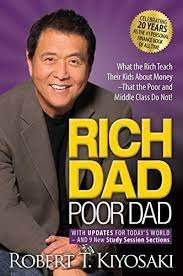
First off, we have a honorable mention and that is Rich Dad Poor Dad, written by Robert Kiyosaki. Now I would like to put this in the top five but this time around I can't do that because it's just a little too basic. What it did for its time is revolutionary, introducing the aspect of assets and liabilities and making sure something really serves you. By today's standards though it's way too conceptual. People are demanding useable action, like hey show me how to directly do something.
I feel like that's really lacking in that book. I do like the graphic novel sense it's told in and it does really nail in that concept of assets and liabilities as well as the rich don't work for money. These are strong conceptual things but they don't have enough active things to show you how to do stuff like that. So it's just an honorable mention as it stands, but a good honorable mention at that.
Now this next part, some of you all aren't going to like, but I recommend that you read or listen to all the books at least five times before moving on to the next one. Plus, it would benefit you the most if you listened or read them in a particular order. I can hear you all now. "Hey man, why I got to read/listen in all these five times in a row? I don't have time for that." Well, it's up to you. Do you want the strong foundation so that you can build money or do you want to complain? That's just up to you. Now some of you all might say, well I ain't got time to sit down and read a book five times. Well, great news! All of these books are available in audiobook form so There are plenty of opportunities to sneak in some time to listen to them once you think about it.
So listening or reading them in this order is going to have the most benefit because some of these are over detailed and they will go of your head and some of these are more conceptual and some have a exact balance. if you're going to include the honorable mention, it's going to be Rich Dad Poor Dad: What the Rich Teach Their Kids About Money That the Poor and Middle Class Do Not! This book is a like 75% conceptual, 25% like detail action, but that's needed when you're first getting started. You really need to lay a foundation on what mindset you need to have.
Next it's going to be Money Magic, same as Rich Dad Poor Dad in terms it being 25% like detailed stuff and 75% conceptual. Next is going to be The Anatomy of Financial Success. This is the first book in this little foundation series where it has a balance between conceptual and detail. So it's 50/50 and that's what you're going to need once you start to get a grasp of the financial concepts in general. Then you can get a more balance book where things aren't going to go over your head. The Anatomy of Financial Success is going to lay a foundation to where any book you read in the future, you'll have a place to put that information so it just doesn't fall to the wayside, so to speak.
Next up is going to be Alpha Money Strategies. Another book that strikes a good balance between conceptual and detailed. It's 50/50, so 50% detail, 50% conceptual. It has a very direct approach towards setting up a foundation in a practical way. Then next is going to be Robert Kiyosaki's Increase Your Financial IQ. This is a book that's more detailed and is actually 75% detailed, 25% conceptual. The information will go over your head if you don't read the previous books mentioned before. If you've read or listened to them though, then you're going to be fine. You can soak up all that great game.
Lastly, Dave Ramsey's Total Money Makeover which is 75% detailed, 25% concept. I mean the concept is pretty much financial peace and staying out of debt period and living debt free. Pretty easy concept. Once you read these books you can make a decision if that's for you or not. But regardless if you choose to use that or not, you need to know the other side of the equation.That's why I recommend his book comes in last, because this is probably the most detailed among all these books. Hence you need more perspective before you tackle that.
And there you have it. We have the five, or if you're going to include Rich Dad Poor Dad, six books, to lay a firm financial foundation that they can build off of. If I'm being honest, you could read or listen to these five books and stop and you would be fine. That would be the equivalent of getting, let's say an associates in quote and quote in finance. And that's good because you need to have this financial foundation. I really feel that information in these books combined really should be required as basics in college. Not that stuff about math, algebra and English and just a retread what we did in high school, which isn't going to serve us in the least in the real world in most cases.
I mean this should be the basics but that's for another article. That does it for this one though. If you would like to get any of the books covered, you can get them here. I will catch you in the next one. Don't forget to get out there and take control of your financial destiny!

Personal Finance For Young Adults In 2026: Expenses
When we hear this word our energy often goes down. It is one of the staples for personal finance though, especially for young adults. Our energy goes down likely because we see expenses as a necessary evil. Money has to go here, otherwise life is going to get harder.
While you’re not wrong, take a second to think how life would be without what the expense is paying for. What would life be like without your car? What would it be like without a place to stay? You would have to walk or ride a bike everywhere. You would have to find other means to convince the real estate owner that it’s in his interest to let you stay there.
What if you had to give him or her something every month instead of money? This month I had to give my PS4. A month before that, my old computer. Before that, I had to give my favorite dining room set! What would life be like without your gym membership? Would you get fat because you couldn’t go to the gym anymore?
I could fill the rest of this article with examples of how life would be without expenses. This is brought up, so we can realize the role they play in our lives.
Ultimately, expenses need to be looked at from a form of appreciation. It’s either looking at them like that or be stuck with that necessary evil feeling. I don’t know about you, but I’d take that appreciation feeling over the other one any day of the week.
What is an expense though? The dictionary definition is the cost required for something. I’d take that a step further and apply that definition when it comes to things we need. I wouldn’t consider me buying a new video game that month an expense, although it technically fits the textbook definition.
There are 2 types of expenses when it comes to personal finance. The first type is something that you pay for once, and it’s done. If I take the toll road for an hour, a bill comes in the mail. I pay it, and it’s done, unless I decide to take the toll road routinely, which I certainly will not! The second type of expense is the reoccurring expense.
This type of expense keeps showing up for payment at a regular interval. You might be thinking these are monthly expenses. While monthly expenses are a type of reoccurring expense, they are not just limited to just monthly ones. The biggest example of this is paying taxes. For most people, this is an annual expense, and for some, it is a quarterly one. Some common examples of reoccurring expenses are as follows:
Mortgage or rent payment
Car note
Utilities
Internet bill
Phone bill
Car insurance
Health insurance
Homeowner’s insurance
These are just a few examples of many expenses, and while each person’s expenses will vary depending on their situation, there are some universal expenses that most if not everyone has.
Living Expenses
Once you leave home and are on your own, you will likely have some kind of overall living expense to make each month. In most cases, this will be a mortgage or rent payment. Regardless of what it is, it’s in your best interest to research, and be informed on how what you are paying for is in your best interest at the time.
For example, renting and owning, while both are a living expense are different and have very different pros and cons. A person financing a house with a 30-year mortgage will slowly build equity in the house as they make their payments. This means that if they decide to sell in the future, they can get money out of the deal. If the house is paid off, they will no longer have that living expense to deal with.
They could even rent the house out and make rental income if they wanted to. On the flip side, the house is theirs, so when something goes wrong with the property, they are responsible for fixing it. That 30-year mortgage also ties their hands.
If they break that agreement for whatever reason, it will affect their credit report, which can inhibit their buying decisions going forward. Is owning a home worth the pros and cons of it?
Turning it around a bit, a person who rents a house has no long-term strings attached. If they get a better job offer in a new city, it is relatively easy to move on from that property and move to their new work location. The landlord is responsible for the upkeep of much of the property, leaving these tasks off the person’s mind.
On the other side, the payments they are making contribute no long-term value since they do not own the property, and if they wanted to make changes to the place, they couldn’t. Renting also has its pros and cons.
These personal finance examples are simple and don’t go into the details, but they are used to illustrate the point that a living expense is necessary. But, which one is best? Someone who is somewhat of a nomad, putting in applications for a job in their field, is ready to get up and relocate their whole life if the right job offer comes may find more value in renting.
Someone who is more stable and looking to raise a family may find owning more valuable. The key is that thought is put into how this needed expense serves your interests. We often overlook doing this because we dread expenses so much. Once you look at expenses from the perspective mentioned above, you start to see how this expense is serving you.
This also paves the foundation for you to see how the same type of expense that serves a purpose may serve your needs better in a different form and sometimes for around the same price.
Car Note
Buying a car in cash is fantastic, but in many cases, it has to be financed. Or does it? Is it more practical to save the money and buy a cash car? Does it make more sense to finance the car? These are the questions you should be asking yourself.
If you do finance a car, should it be a new or used car? How will that decision affect other expenses down the line (oil changes, maintenance, replacing brakes, etc.)? These things may be a more significant factor in a used car, but more times than not, a used car is cheaper than a new one.
Is the $$$ difference between the new and used one going to make up for the depreciation of the used car? On top of these, what will the interest be if you do finance? Only you can decide this, but these questions have to be on your mind for you to make an informed decision.
Liabilities
All of these questions lead to this word if they haven’t been mostly positive. The popularized definition of a liability is something that takes cash out of your pocket. Some see liabilities as reoccurring expenses.
They technically are and feel free to label them as such. Since by definition, a liability is an expense, you will hear me referring to them as reoccurring expenses or just expenses for the duration of this book. The thing to remember here is that there are needed expenses and unneeded expenses.
This is not saying you should not have unnecessary expenses. You just want to keep them manageable and to a minimum until your income increases enough to justify expanding your means. It is that very behavior that creates an imbalance in a person’s earnings to spending ratio, likewise causing financial problems.
Paying for an expensive golf club membership when you can barely make rent payments is a visual of this scenario. On the flip side, if you are doing well for yourself, with steady cash flow every month meeting your monthly expenses, you have a savings and modest investments, then something like that isn’t bad. It’s just expanding your means and may even serve as motivation to maintain it.
There is nothing wrong with getting things that allow you to enjoy life. These should be obtained after you’ve acquired the income stream that can pay for these things.
Depending on what type of income you make, the approach for paying for something can be different. That’s another book in itself. Will it be better to pay these things off in payments or save and buy in cash? These are the questions you should be asking yourself.
In a nutshell, expenses are needed to live in today’s society. We have the freedom to choose which ones we want, and since we do, it’s in our best interest to educate ourselves about the ones that are best for our situation.
To do this, we have to be familiar with the dynamics of our situation, and how these needed expenses affect it–for better or worse. While there are different types of expenses, they all fall into one of these categories: Survival expenses, luxury expenses, and investor expenses.
If you’re looking for more information on personal finance for young adults, you can checkout my free E-book/Audiobook, Steal my financial blueprint. In it, I lay the blueprint that all young people need to implement to ensure that their money is going in all the appropriate places to take care of them, both today and later in life. You can get the book here.